Sustainability in personal care is moving beyond recyclable packaging and reduced plastic. Today, brands are looking more closely at what goes into their products – and where those ingredients come from.
One of the most interesting developments is the growing use of upcycled ingredients: materials that might otherwise be discarded or treated as waste but can be transformed into useful, high-value components for personal care products.
For soap brands, this presents an exciting opportunity. Upcycled ingredients can bring new stories, sensory experiences, and sustainability benefits to bar soap formulations while helping brands respond to consumers who increasingly want products that align with their environmental values.
What Are Upcycled Ingredients?
Upcycling involves taking an existing material or byproduct and giving it a new, higher-value application.
In personal care, this could include materials generated during food, agricultural, botanical, or other manufacturing processes. Rather than allowing potentially useful materials to become waste, they can be processed and incorporated into new products.
This is different from simply recycling packaging or reducing manufacturing waste. Upcycling focuses on finding a second life for ingredients and materials that already exist.
For soap manufacturers, the possibilities can include botanical materials, plant-derived components, fruit or seed byproducts, and other carefully processed ingredients that can contribute to a formulation.
Why Upcycled Ingredients Matter for Soap Brands
Consumers are becoming increasingly interested in the story behind the products they purchase. They want to understand where ingredients come from, how products are made, and whether brands are making thoughtful choices about environmental impact.
Upcycled ingredients can help answer those questions with a compelling story.
Instead of simply telling consumers that a product is “sustainable,” a brand can explain how a previously underused material has been given a new purpose.
That story can create differentiation in a crowded personal-care market.
Turning Byproducts Into Performance
An upcycled ingredient may have an interesting origin story, but that alone doesn’t make it a good soap component.
Depending on the material, potential applications may include:
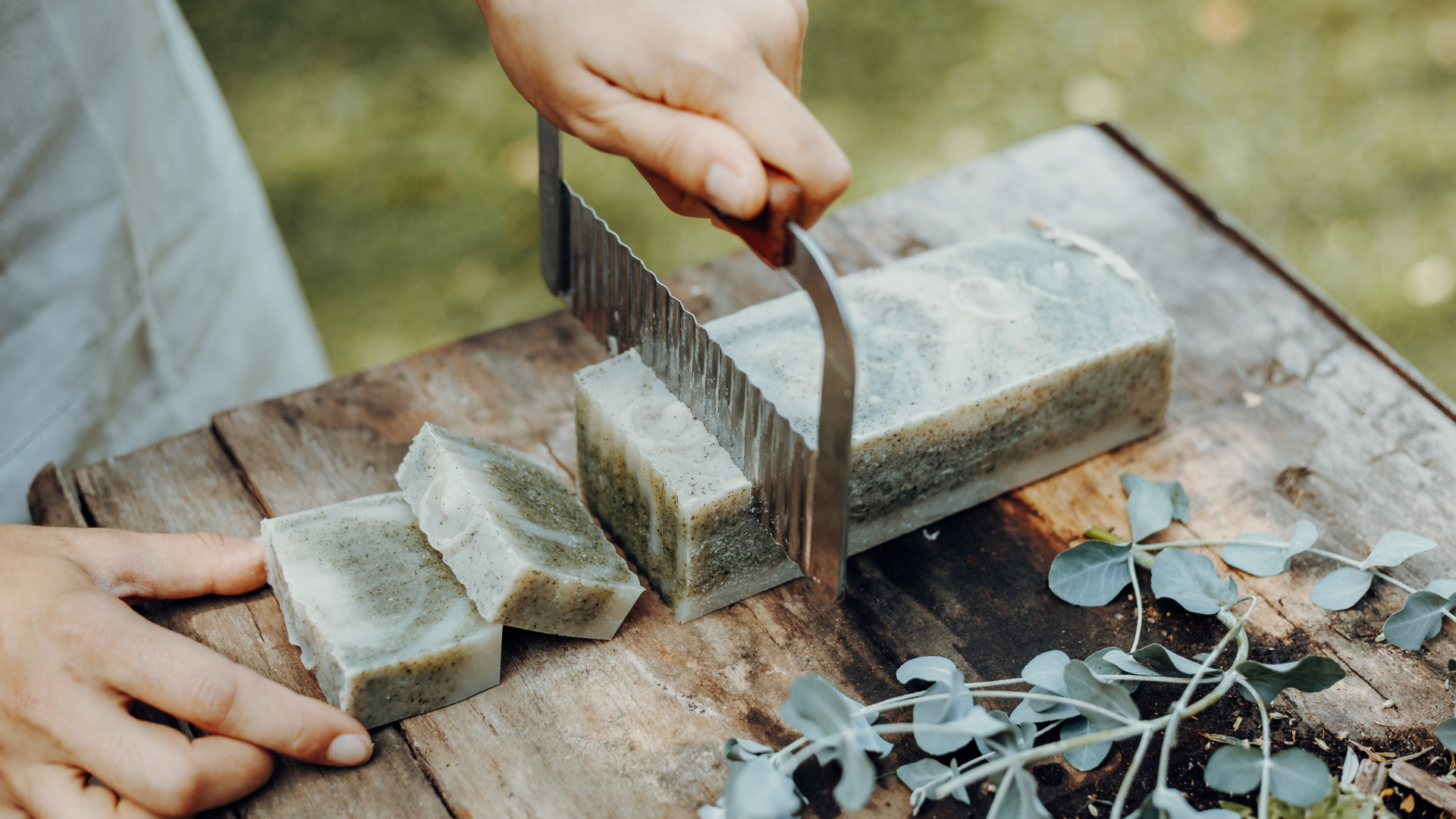
- Exfoliation: Carefully processed plant-based particles can provide physical exfoliation.
- Color: Certain botanical or plant-derived materials can contribute natural-looking color.
- Sensory appeal: Ingredients can add texture, appearance, or other sensory characteristics.
- Botanical positioning: Plant-derived components can support a nature-inspired product concept.
- Marketing differentiation: A unique ingredient story can help a product stand apart on the retail shelf.
The key is to approach upcycling from a formulation-first perspective.
Examples of Upcycling Opportunities
The world of upcycled ingredients is constantly evolving, which makes it an especially interesting area for product development.
Materials from food and agriculture can be particularly promising because processing often creates substantial quantities of secondary materials. Seeds, peels, fibers, shells, and other plant components may contain compounds or physical characteristics that can be useful in personal care applications.
For example, certain fruit or seed byproducts can potentially be processed into exfoliating materials. Botanical processing leftovers may also provide opportunities for ingredient development, depending on their composition and suitability.
Formulation Is Where Sustainability Meets Performance
This is where the expertise of a soap manufacturer becomes especially valuable.
CST’s bar soap development process begins with understanding the desired product, including characteristics such as moisturizing properties, exfoliation, fragrance, target market, and regulatory considerations. Ingredient selection is then tailored to the intended characteristics of the finished soap.
That approach is particularly important when working with emerging ingredients.
The Consumer Story Matters, Too
One of the biggest advantages of upcycled ingredients is the story they can give a product.
Consider the difference between:
“Made with botanical ingredients.”
and
“Made with thoughtfully upcycled botanical materials that would otherwise go unused.”
The second statement creates curiosity.
It gives consumers something to talk about and gives the brand an opportunity to demonstrate its approach to sustainability.
Upcycling Can Support a Broader Sustainability Strategy
For brands looking to build a more sustainable soap line, ingredient sourcing can become one part of a larger strategy that includes packaging, manufacturing efficiency, responsible sourcing, certifications, and product design.
Manufacturing efficiency can also contribute to a product’s sustainability story. CST’s soap base operation uses a computerized continuous saponification system designed to reduce energy consumption compared with older kettle processes.
The takeaway for brands is simple: sustainability is most powerful when it is built into the product from multiple directions.
Challenges Brands Need to Consider
Upcycled ingredients offer plenty of potential, but they also come with challenges.
Unlike conventional cosmetic ingredients with long histories of commercial use, emerging upcycled materials may require additional research and testing.
Brands and manufacturers may need to evaluate:
- Ingredient safety and regulatory requirements
- Consistency from batch to batch
- Supply availability and scalability
- Processing and purification requirements
- Odor and color variations
- Compatibility with the soap formulation
- Stability during manufacturing and storage
- Appropriate marketing and sustainability claims
Creating the Next Generation of Sustainable Soap
Upcycled ingredients represent an important shift in how the personal-care industry thinks about raw materials.
Instead of viewing certain materials as waste, manufacturers and brands can begin asking whether those materials have untapped value.
For soap brands, that creates opportunities to develop products that are not only effective and appealing but also have a meaningful sustainability story.
Partner With a Manufacturer Ready for What’s Next
Developing an upcycled-ingredient soap requires more than a creative idea. It takes formulation expertise, ingredient evaluation, manufacturing capabilities, quality control, and a clear understanding of the target market.
CST has more than 30 years of experience developing and manufacturing bar soaps, liquid personal-care products, and soap bases for retail brands, private-label companies, hospitality businesses, spas, healthcare organizations, and other industries.
With custom formulation capabilities and a focus on sustainable and innovative personal-care products, CST can help brands explore new approaches to soap development—from the initial concept through production and packaging.
The next great soap ingredient might not be something new. It might be something we simply haven’t found a better use for yet.
At CST, we’re interested in finding out what’s possible.
Ready to explore a more innovative approach to your next soap product? Contact Commonwealth Soap & Toiletries to start the conversation.